Showing posts with label Africa. Show all posts

Sunday, 16 February 2014

Kaya Energy Bar & Design Accra: Ghana gets its first luxury raw food restaurant.....


Paulina says: The weather in London has been a nightmare, my little man now has the beginnings of a cold, -still I mustn't grumble, -there are many in the UK truly suffering with floods et al.

Anyways I was talking to La Accra socialite last night and she mentioned that she was very cross with me -with regards to my lack of forthcoming post(s) about that new plastic surgery place in Accra Ghana -she wants me to post it before someone else does!!!

Again I had to let Ms Jagger-jagger know that I took precious timeout from my tight-over-fraught schedule to message said plastic surgery place ---to ask to speak to its founding surgeon and at least
four happy customers/clients for me to interview etc, -and they failed to get back to me -and as I 've stated here on Ghana Rising Blog in the past, -I will not post something as serious as a plastic surgery on La blog without having some real facts....and testimonials.

Still, La Accra socialite reminded me about the newly opened chichi Kaya Energy Bar & Design Accra, -known locally by Accra's style elite and expat community as Kaya, and informed me that they had now uploaded images onto their FB fan page -very good!!!

Its soooooooooo important for all businesses to have a FB page -even more sooo than a website -at timessss. The honest-to-goodness truth is that I'm contacted daily by businesses who 'get the power of La Ghana Rising blog post' but ------I tend to only write about 10% of said businesses as I often don't understand what they are selling, -one,  -and two, ---most don't have up-to-date websites and the few that do, -the website are utter rubbish!!! Thus, I tend to prefer FB, its free after all.. -Plus, all said businesses have to do, is update their fan page daily ---but this also -is very difficult for some!!!

Anywaysssss, La Accra socialite is raving about Kaya and its trendy-new-to-Ghana-and-Africa-green-credentials...


According to La Accra socialite, Accra's urbanites have been crying out for somewhere uber elegant, well elegant enough for them to take their visiting friends (the likes of you and me), a venue that understands that the 'world of the fashionable and the fabulous' no longer do sugar but raw food -and Kaya is that with bells on!!!

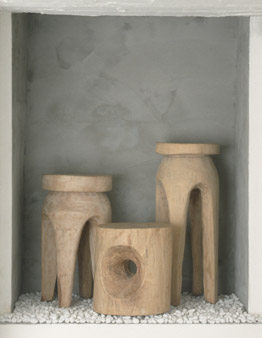
Apparently Kaya, -a contemporary concept bar-and-restaurant-come-chic-design-furniture-and lifestyle-store (they are selling most of the quality elegant furniture you see in the photos above) -is the place to be if you want true exclusivity and beautifully prepared healthy food, including raw food as we have already established (though I can't quite see the likes of my father going in for all that raw food stuff) -in the most serene, gorgeous surroundings in Accra's chic Cantonment postcode. ...and you know what, I can't wait to check out it...

I would like to take this opportunity to thank the haute folks behind this 'green' venture and gorgeous venue for adding more icing to Ghana's burgeoning sexy lifestyle cake... For more info about Kaya (Energy Bar & Design Accra) visit: http://kayaenergybaranddesign.com/ &
https://www.facebook.com/KayaGhana


More Info:

Raw Food Restaurant, Nature Shop & Gallery

Description:
Kaya Energy Bar & Design is a conscious life-style concept of blending a bar, raw food restaurant and designer show-room, offering furniture, textiles, jewellery, cosmetics, super-foods and other products of natural and organic origin.

In beautifully decorated showroom, terraces and gardens (see attached pictures), KAYA serves natural and healthy drinks, all prepared with fresh fruit, vegetables, organic seeds and super-foods.

A raw food menu (first of that kind in Africa) is created by Green Chef Darko Juric. Why eat raw food? Cooking is the major factor that destroys the vitality and essential nutrients in the food. Eating our food raw improves our health and well-being.


**Credit: All photos come courtesy of Kaya Energy Bar & Design Accra
 

Friday, 15 June 2012

Kanye West as an Ashanti King……


I claimed Kanye West as one of my own a hundred years ago, and as far as I’m concerned -he’s of Ghanaian origin (laughter). -Anyway, imagine my surprise…, when I stumble upon this fab imagine of Kanye via Face book -looking uber regal in a majestic kente cloth fit for a king?

I don’t know if this image is real or photo-shopped, but I love it paaaaaa… He looks sooo at home as an Ashanti King…

Hope to see Kanye in Ghana soon….. x

Saturday, 11 February 2012

When Accra was great, the architecture of Mid-century Ghana…..


Paulina Opoku-Gyimah says: Sometimes I wonder…..are we [Ghana] regressing? Is it me or does Accra look less modern -now?? Has our failure to develop northern Ghana -left Accra overcrowded, prone to cholera outbreaks -and looking less advanced? I don’t like to compare our Ghana to other African nations -or Accra to other African capitals but -we’re not exactly skyscraper 21st-century fabulous are we??? I love the architecture of Mid-century Ghana!!! 50’s Ghana seemed soooooo promising, much cleaner and more modern????


Title: Midcentury Modern: Ghana’s Freedom Fad.
From: Troverove.com

January, 1957. Description: Exterior of the new Central Library in Accra. Location: Gold Coast, Accra, Ashanti, Sekondi, Ghana. Courtesy of The National Archives, UK. Obtained from: http://www.nationalarchives.gov.uk/africa


1952. Description: Exterior of part of the new building of the Kumasi College of Technology. Location: Ashanti, Ghana. Courtesy of The National Archives UK. Obtained from: http://www.nationalarchives.gov.uk/africa

The National Archive’s [UK] Africa Through a Lens is a collection of thousands of images from Foreign and Commonwealth Offices, taken from 20 African countries starting in the 1860’s through the 1980’s. This date range spanned from colonization to

the independence of many African nations. Looking at the collections, the indicators of change are apparent. Having the most notable signs of this transition, is the Ghana collection. Among early images of chiefs, tribesmen and villages are photographs from urban Ghana in the mid 20th century with signs of modernization through infrastructure, especially architecture.

During Ghana’s transition from British rule to independence, 1951-1957, the emergence of ‘tropical architecture’ began and continued through the 1960s. In Mark Crinson’s book, Architecture and the End of Empire, there is a section dedicated to this movement Ghana, although it was prevalent in much of Western Africa, and discusses its synonymy with liberation from imperial rule. The excerpt below, from Crinson, describes the progression:


Location: Accra. Courtesy of The National Archives, UK. Obtained from: http://www.nationalarchives.gov.uk/africa

“Everything of the colonial period – a period now past, was to be distrusted and even discarded without explicitly acknowledging it as belonging to a colonial past, nor the possibility of a continuing colonial presence or a rising neocolonial future.

‘Tropical architecture’, it was hoped, was not so much post-imperial as beyond imperialism, part of another world-view all together. It was part of an imagined world where liberation had already happened, without violence and without social unrest, and in which the job now was all to do with modernization, the opening up of another field for architectural territorialization. As the old modernist rallying cry had put it, ‘Architecture or Revolution’.”

There were two prominent figures who lead the tropical architecture movement in British West Africa, Maxwell Fry and Jane Drew. Fry and Drew, a British couple, were both leading modernist architects in London. During World War II, Fry was sent to Ghana on a military post. Once the war was over, Fry and Drew stayed to contribute their architectural endeavors in Western Africa and give birth to ‘tropical architecture’.

In this new style, buildings were usually built with cement walls and incorporated elements to cope with the heat and humidity, such as cross-ventilation by the use of pierced screens, verandahs, perforated walls, and wide eaves. The use of African designs in detailing was encouraged, commonly seen banisters and window decorations. Hospitals, universities, museums, libraries, municipal centers, and embassies were some of the likeliest candidates to receive an edifice in the style of tropical architecture.


Description: A view of the new Central Hospital and Nurses' Training Centre at Kumasi, In Ashanti. Courtesy of The National Archives UK. Obtained from: http://www.nationalarchives.gov.uk/africa/


Description: The Kumasi hospital. Location: Accra, Kumasi. Courtesy of The National Archives UK. Obtained from: http://www.nationalarchives.gov.uk/africa/

It should be acknowledged that this revolutionary form of architecture was led by British architects. The colonizing nation’s talent was still dominating planning and creation of the prominent facilities for change while enforcing a European system. With mostly British contractors using African workforces, the recipients of the largest salaries were most certainly taking funds back to the homeland of their former imperial rule. Despite finding possible flaws with the movement of ‘tropical architecture,’ the sleek, linear structures nestled in the lush Ghanaian landscape were beacons of hope and progress.

The National Archive has hosted Africa Through a Lens on Flickr, so that the public can contribute any information regarding the images since much data is missing. Peruse Ghana, along with 25 other African countries, and look out for the signs of liberation.

Description: Electricity House, Accra, the new Headquarters of the Electricity Department. Location: Accra. Courtesy of The National Archives UK. Obtained from: http://www.nationalarchives.gov.uk/africa/


January 1957. Description: Schoolboys and a teacher in the grounds of the Opoku Ware Boys' Secondary School at Kumasi, in Ashanti. This boarding school, in its new and modern building, was established in 1952. Location: Gold Coast, Kumasi, Ashanti, Ghana. Courtesy of The National Archives UK. Obtained from: http://www.nationalarchives.gov.uk/africa/


Description: The headquarters of the Industrial Development Corporation (left) and beyond it the newly opened Co-operative Bank in Accra, the capital of the Gold Coast. Location: Gold Coast, Accra, Ghana. Courtesy of The National Archives UK. Obtained from: http://www.nationalarchives.gov.uk/africa


**Location: Gold Coast, Accra, Ghana. Courtesy of The National Archives UK.

Credit Text and Photos: http://troverove.com/

Sunday, 29 January 2012

Emerging Ghana Affordable Housing Concept.....


I stumbled across the following piece about eco/sustainable housing in Ghana via http://inhabitat.com/architecture/ and had to share.. Not only do I want this house but I would love to see more of this type of eco-friendly/environmentally sound/sustainable homes in Ghana… It truly blows my mind that we have all this sun but no solar powered houses in Ghana -I’m I missing something??? The piece is dated 06/29/10 -and I have no idea if this innovative house was ever built.. If you have more information -do get in touch. Thanks…


The winner of the Open Source House Ghanaian competition which will be built as a pilot project in Ghana and the start of the great challenge that Open Source House provides.

*****
Title: Local, Modular and Efficient Eco-Affordable Housing For Ghana

By Bridgette Meihold -Dated: 06/29/10

A lot of concept houses come across our desk here at Inhabitat, but we were really impressed with this design for eco-housing in Ghana. Designed by Lisbon-based Blaanc in collaboration with Architect João Caeiro, Emerging Ghana is a plan for an eco-affordable single family house for the emerging middle class of Ghana. The design recently won first place in the international design competition Open Source House, a non-profit organization that aims to provide better, more sustainable housing in low-income countries. Emerging Ghana is modular single-family home design to be built with local materials, local labor, and with all the best sustainable design strategies you can imagine, all for a low cost of about $12,500 USD.

The Open Source House competition challenged architects to design an affordable, flexible and sustainable house that will be made available to people living in poor housing conditions. Blaanc and João Caeiro responded with their completely practical and well-considered concept for a single-family home based on the Ashanti compound, a courtyard building with a deep structure and large overhangs that encourage natural ventilation. Modular by nature, the home can grow as funds allow and as the family expands. Construction materials are all locally sourced – rammed earth walls, dahoma wood, and bamboo can all be found nearby to construct the home. Meanwhile, local people would be taught how to build the homes, giving them a new skill set and boosting the economy.

Energy efficiency was a primary design goal to improve the home’s overall sustainability, but more importantly to create a more comfortable living environment with minimal costs. Low-tech energy solutions would be capitalized on to minimize energy use and maximize comfort. Solar passive design with a south-facing structure and large overhangs provides shade for the interior. A solar hot water tank on the large roof provides hot water for the kitchen and bathroom. Orientation of the home improves natural ventilation, while rain water is collected for use within the home and for the garden in the courtyard, which helps provide some of the family’s food. A small scale septic tank manages the household’s waste, while organic waste is composted in the yard. The concept will be built sometime in 2010.
http://inhabitat.com/architecture/
http://www.blaanc.com/

Text & Images credit: http://inhabitat.com/local-modular-and-efficient-eco-affordable-housing-for-ghana/
 

Saturday, 28 May 2011

Joe Osae-Addo’s Home in Accra -probably the most beautiful home in Africa…


Designed without air conditioning, the house was raised three feet off the ground to take advantage of the cooling under floor breezes. Sliding slatted wood screens throughout the home allow cross ventilation from outdoors and the fans overhead.


I stumbled across architect Joe Osae-Addo’s serene interiors via Escapade blog and fell in love. I wonder -all those Accra based hotels that claim to be 4 or 5 star, why don’t they consult architects like Joe Osae-Addo’s and David Adjaye -or interior designers like myself, because this is how successful African interiors look like. The colours, textures, furniture and quality of Mr Osae-Addo’s home speaks for itself! Be inspired -dare to do it properly or call me.


More Info…
Title: At Home in Accra
When Ghanaian-born architect Joe Osae-Addo decided to move back home to Ghana from Los Angeles, he set out to design a space inspired by the striking modern style of his favourite icons - Finland’s Alvar Aalto, Australia’s Glenn Murcutt, and L.A.’s Ray Kappe and apply it in a way that was relevant and suitable in an African context. Through long distance correspondence, he and his fiancee Sarah Asafu-Adjaye designed a space that would stand out among Ghana's typical concrete block houses. The house has a balcony wrapping around it, inspired by both colonial English bungalows and the courtyard plans of rural Ghanaian houses. “There are no internal corridors,” Osae-Addo says, “so rooms extend from one wall to the opposite wall, allowing for free flow of light and air." www.escapade blog

(Credit: http://www.escapadeblog.com/2011/03/at-home-in-accra.html)

Friday, 22 April 2011

The 20 Most Powerful People in African Business 2011 by Forbes Magazine

Africa means business. The past decade has seen an enormous number of mega-corporations emerge on the continent. However, a vast number of these companies are run by foreigners. For example, SABMiller, the world’s second largest beverages maker, is led by CEO Graham Mackay, an American. The head of AngloGold Ashanti (AU), the world’s largest gold producer, is Mark Cutifani, an Australian national. Safaricom, East Africa’s largest telecoms provider, is run by Bob Collymore, a Guyanese.

However, a new league of African businessmen is emerging. They are bold and fearlessly ambitious, building pan-African companies with regional and even global presences. They are influencers and change-makers. Their voices are never ignored within Africa’s business and political circles, and through their resolutions and actions, they shape the economic future of the continent. Here are the 20 most powerful men in African business:

Marius Kloppers
Nationality: South African
Job: C.E.O BHP Billiton
The world’s largest mining company, BHP Billiton (BBL) has ridden the crest of the biggest commodities boom in recent times. The company is set to announce a pre-tax profit of $30 billion in June, the largest in recent British corporate history. Kloppers spearheaded it all. His biggest problem: How to spend the money. Possible solutions: Massive share buy-back, strategic acquisitions, or increased dividend payout to shareholders.
Kloppers earned his MBA at INSEAD; worked at Sasol (SSL), Mintek and McKinsey & Co before joining Billiton in 1993. He became C.E.O in 2007.

Jacko Maree
Nationality: South African
Job: C.E.O, Standard Bank Group
The former Rhodes Scholar sits at the helm of affairs at Standard Bank Group, Africa’s largest financial services conglomerate. The $26 billion (market cap) group operates in 33 countries (17 are in Africa). He led the bank through its aggressive global expansion, making key acquisitions in Turkey, Russia, Argentina and Jersey.
Maree currently serves as chairman of The Banking Association (S.A.) and is a former director of the International Monetary Conference.

Patrick Davies
Nationality: South African
Job: CEO, Sasol
Patrick Davies is CEO of Sasol (SSL), Africa’s largest energy company, headquartered in South Africa. The $34 billion (market cap) company is the continent’s leader in the commercial production and marketing of chemicals and liquid fuels. It is rapidly expanding into oil and gas exploration.
Davies is credited with driving the internationalization of Sasol’s gas-to-liquids technology. He has a degree in mechanical engineering from the University of Natal, South Africa.

Nicky Oppenheimer
Nationality: South African
Job: Chairman, De Beers Group
Oppenheimer, an Oxford grad and South Africa’s richest man, chairs De Beers Group, the world’s largest diamond producer, as well as its subsidiary, The Diamond Trading Company. He sold nearly 8% of his stake in AngloAmerican, the mining giant founded by his grandfather Ernest Oppenheimer in 1917. Now owns 2%. The passionate environmental conservationist owns the Tswalu Kalahari Reserve, the largest private game reserve in South Africa. Avid cricketer.

Sifiso Dabengwa
Nationality: Zimbabwe
Job: CEO, MTN Group
Big job ahead: Sifiso Dabengwa was recently appointed the Group Chief Executive of MTN, Africa’s largest telecommunications firm. Company boasts 118 million subscribers in 21 countries. He has held several strategic managerial posts in the company, at one point manning the company’s Nigerian operations, its most profitable market. Prior to joining MTN, Dabengwa worked at South African electricity generator Eskom. Trained electrical engineer has an MBA from the University of Witwatersrand.

Cyril Ramaphosa
Nationality: South African
Job: Chairman, Shanduka Group, MTN
One of South Africa’s most respected business and political figures. In 2007, he was named by Time Magazine as one of the world’s most influential people. A renowned boardroom guru, he chairs the board of telecoms giant MTN and serves on the board of Standard Chartered Bank. He is the founder and Executive Chairman of Shanduka Group, a pioneering Black Economic Empowerment (BEE) Investment Holding company with substantial interests in energy, financial services, natural resources and property. Recently acquired the South African operations of American fast food giant, McDonald’s (MCD).

Aliko Dangote
Nationality: Nigerian
Job: President, Dangote Group
The former commodities trader is now a billionaire who heads the Dangote Group, a conglomerate with interests in sugar, flour and cement. Crown jewel: $12 billion (market cap) Dangote Cement. Already the continent’s largest cement manufacturer, the company plans to list on the London Stock Exchange before the end of the year. But investors are skeptical. The company’s stock is down 15% since listing on the Nigerian Stock Exchange last year; yet to bounce back to IPO price. Dangote is a major financier of Nigeria’s ruling People’s Democratic Party.

Koos Bekker
Nationality: South African
Job: CEO, Naspers
South African media mogul is CEO of Naspers, Africa’s largest media conglomerate; also its biggest individual shareholder. The $12 billion (market capitalization) company owns stake in pay-TV giant DSTV; Russian Internet company Mail.ru; Brazilian publisher Abril and Chinese Internet service provider Tencent. He was also a founding director of MTN and served on the local organizing committee for the 2010 FIFA Soccer World Cup. Also serves on the council of Stellenbosch University, his alma mater. Chief executive of Naspers since 1997.

Abdeslam Ahizoune
Nationality: Moroccan
Job: Chairman & CEO, Maroc Telecom
The Moroccan is the chief executive of Maroc Telecoms, one of the continent’s largest telecommunication companies (owned by French media giant Vivendi). Prior to the appointment, he was Chairman and Chief Executive Officer of Medi1Sat, the Moroccan television channel now called Medi 1 TV. Still remains a Director. He holds an engineering degree from Telecom ParisTech (1977) and was appointed the chairman of the Moroccan Association of Telecom Professionals (MATI) in 2008. He serves as the President of the Royal Moroccan Athletic Federation.


Onsi Sawiris
Nationality: Egyptian
Job: founder, Orascom Group
Legendary patriarch of Egypt’s most powerful business dynasty. The Orascom Group which he founded has interests in telecoms, hotels and construction. The companies are all run by his three sons- Naguib, Samih and Nassef–all billionaires like Onsi.

Naguib Sawiris
Nationality: Egyptian
Job: CEO, Orascom Telecom Holding
Call him the ‘Peacemaker.’ After being a vocal critic of Mubarak regime, the Egyptian telecoms billionaire and eldest son of Onsi Sawiris offered to act as a mediator between the government and the opposition in implementing political reforms after Hosni Mubarak stepped down. Naguib heads Orascom Telecom Holding, which owns massive stakes mobile service operators across Middle East, Africa, South Asia, Europe and Canada.

Patrice Motsepe
Nationality: South African
Job: Chairman, African Rainbow Minerals
South Africa’s first black billionaire is Executive Chairman at African Rainbow Minerals Limited (ARM), a leading diversified mining and minerals company, based in Johannesburg. He is also the non-executive Chairman of Harmony and the Deputy Chairman of listed financial services firm, Sanlam. Ardent soccer fan owns South-Africa’s Mamelodi Sundowns Football Club.

Wale Tinubu
Nationality: Nigerian
Job: C.E.O Oando
Trained lawyer bought up Unipetrol, a floundering government-owned petroleum marketing company; transformed into Oando, Nigeria’s largest indigenous integrated energy services provider; active in various West African countries. Oando was the first Nigerian company to achieve a cross-listing on the Nigerian and Johannesburg stock exchanges. Big ambitions: Looking to create Africa’s first oil major. Tinubu serves as co-chair of the World Economic Forum in Africa. Alumnus of the London School of Economics.

Naushad Merali
Nationality: Kenyan
Job: Chairman, Sameer Group
The reclusive Indian-Kenyan is one of East Africa’s most revered businessmen and dealmakers. He heads the Sameer Group – a $2 billion privately held conglomerate with interests in construction, engineering, energy, finance, transportation and software. Also chairs Bharti Airtel’s operations in Kenya. Has close links with country’s president, Mwai Kibaki.

Strive Masiyiwa
Nationality: Zimbabwe
Job: Chairman, Econet Group
The Zimbabwean telecoms visionary founded Econet Wireless, one of the pioneering providers of mobile phone services in Africa. Now seeking expansion outside Africa; company owns a 3G license in New Zealand. He also serves on the Board of Trustees at the Rockefeller foundation.

Reginald Mengi
Nationality: Tanzania
Job: Chairman, IPP Group
Mengi is one of Africa’s most powerful media barons. Started out as an accountant; made first millions manufacturing ballpoint pens and selling them to big retailers. Today, he heads IPP Group, a diversified media conglomerate active in East Africa. Assets include 9 newspapers, 2 television stations and 3 radio stations. Also owns a Coca-Cola bottling plant in Dar-es Salaam.

James Mwangi
Nationality: Kenyan
Job: CEO, Equity Bank
Charismatic Kenyan banker turned around a moribund microfinance company into East Africa’s largest financial services provider. Equity bank now serves millions of customers all over East Africa. Remains largest individual shareholder. Represents Africa in the presidency of the Global Economic Network and also serves as an advisor to the United Nations Environmental Program (UNEP) on commercialization of microfinance in Africa. Member of the Clinton Global Initiative.

Sam Jonah
Nationality: Ghanaian
Job: Executive Chairman, Jonah Capital
The former president of AngloGold Ashanti was instrumental in transforming the mining company into a multinational corporation; increased gold production from 240,000 ounces per annum to over 1.6 million ounces in ten years. Also spearheaded company’s listing as the first African company on the New York Stock Exchange. Currently serves as CEO of Jonah Capital, a South African based investment holding company. Jonah, a prominent boardroom guru seats on the board of several companies including Transnet, ArcelorMittal SA (MT), and the Standard Bank Group.

Chris Kirubi
Nationality: Kenya
Designation: Chairman, Haco Tiger Industries
One of the most vocal advocates for trade and economic reforms in East-Africa, Chris Kirubi founded privately-held Haco Tiger Industries, the region’s largest manufacturer of household consumer goods. Other assets include Kenya’s landmark International House building; largest shareholding in Centum, a Nairobi Stock Exchange-listed investment firm with interests in everything from insurance to Coca-Cola bottling plants, telecoms and energy. INSEAD alumnus.

Donald Kaberuka
Nationality: Rwandan
Job: President, African Development Bank
The Rwandese economist is the current President of the African Development Bank. The 78 country-member financial institution provides loans and grants to African governments and private companies operating within the regional member countries in Africa. ADB commits at least $3 billion to African governments annually. Kaberuka has a PhD in economics from Glasgow University, Scotland.

Credit: http://blogs.forbes.com/mfonobongnsehe/2011/04/15/the-20-most-powerful-people-in-african-business/

***I thank God for Sam Jonah’s life because I was beginning to think that there were no Ghanaians on the list. Honestly, I know we Ghanaians are very private, and know from personal experience that its very possible to sit next to a Ghanaian millionaire and be non the wiser -but I’m guessing that the real reason theres only one Ghanaian on this list, -is because we are not very good at expanding/exporting our businesses to other African countries, -never mind globally.

I’m sooo not surprise, as from my little experience working with Ghanaian businesses/talents/services via my Ghana Rising Blog, I’ve learnt that we Ghanaians can be very lazy. Emails from individuals/buinesses comprising only two lines about their products/services/talent and a link to their YouTube accounts or Facebook pages -demanding that I do the research and write about them/their products/talents etc, -without so much as a website or blog or whatever! Some have even used what I have written, copied and pasted it -without a thank you unto their facebook pages, -personally, I find this cheap, tacky and sad. You just can’t do business like this. I’ve also found that many Ghana based businesses are happy to just sit in their shops/kiosks/whatever and wait for passing trade -and have no idea that the world has become a smaller place, a global village even, and websites are not only essential but are now shop windows unto world. So now your customers are not only your neighbours or Pa Kwesi in Tema but Mrs X who is looking forward to her first trip to Accra/Ghana next week.


Ghana based businesses also seem happy/content with so little trade, -and know nothing of promoting their wares beyond their regular customers. This will only breed mediocre businesses that are only patronised by a limited clientele or the few locals who know of its existence.


Lets do our research and really up our game -and promote our businesses not just locally but globally…Paulina Opoku-Gyimah

Tuesday, 20 July 2010

In The News: Cocoa raider has eyes on Africa’s plenty

Dried cocoa is laid out in Ghana

By Richard Tyler and Laura Roberts / Published: 6:29AM BST 19 Jul 2010

Anthony "Chocfinger" Ward, the commodities trader whose group Armajaro Holdings has just cornered the cocoa market, is planning his next move into food.

Having cashed in the equivalent of a Willy Wonka's Chocolate Factory golden ticket on Friday by paying £658m for enough cocoa beans to manufacture 5.3bn quarter-pound chocolate bars, Mr Ward, 50, is looking to improve his company's diet.


The Mayfair-based financier is among a growing group of hedge fund owners, which also includes American George Soros, who are acquiring food production capacity in Africa.

Mr Ward is betting the growth in the world's population – it numbers 6.8bn today and is expected to reach 7bn in the next two years and more than 9bn by 2050, according to United Nations projections – and a decline in available cropland will push up prices.

Armajaro's food plans include setting up a private equity fund later this year that will invest in ports and roads, farmland and storage facilities in Africa, as well as schools and other infrastructure. Cocoa will remain a key target commodity, but Mr Ward is also building up his sugar trading operations.

"Food will go to a price where it encourages these developments," Mr Ward has said of the trend toward farmland acquisition and food-related investing. "If you're long food, it will give you good returns."

The plan follows Armajaro Holdings' acquisition of 241,000 tonnes of cocoa beans last week – the equivalent of almost the entire supply of the commodity in Liffe-registered warehouses across Europe.

It is a big bet by a company that made $6.1m (£4m) pre-tax profits on $1.4bn in sales in the 13 months to September 2009. Armajaro and its subsidiaries had short-term borrowing facilities of $480m at that date.

But Mr Ward has form. City traders first dubbed him "Chocolate Finger" in August 2002 after he acquired 204,380 tonnes of cocoa beans. Mr Ward made £40m in two months after he watched the price of cocoa increase from £1,400 a tonne to £1,600 a tonne. He told The Daily Telegraph in 2002: "We are not trying to inflate the market."

If Mr Ward holds the cocoa for long enough he could force manufacturers to raise the price of chocolate bars. He has so far declined to comment about his plans. Cocoa prices rose by 0.7pc last week to peak at £2,732 per metric tonne – the highest price for cocoa in Europe since 1977. The rise follows a series of weak harvests in Ghana and the Ivory Coast, two of the largest suppliers.

Armajaro, which is one of Europe's top three cocoa traders by volume, has made no secret of its desire to increase physical delivery of cocoa. It said in its latest accounts that it planned "to develop its physical commodities business by further expanding its sourcing operations to enable it to supply its customers with increasing quantities of traceable commodities".

Chairman Martin Lampert said the group's commodities trading subsidiary was benefiting from "a significant shift in the cocoa industry towards the sourcing of traceable and sustainable products, with several major chocolate manufacturers announcing their intention to source accordingly".

He added that Armajaro's trading business had capitalised on this trend and would "continue to develop infrastructure in existing and new origin countries to support this demand".

The Financial Services Authority regulates three of Armajaro's businesses and launched an inquiry into the 2002 trade. Its findings were never made public. Last month European cocoa traders lobbied Euronext Liffe to re-examine the issue, claiming that speculators were distorting the market.

The rise of Anthony Ward
Anthony Ward began his career as a motorcycle dispatch rider before becoming a commodities trader at Salomon Smith Barney’s Phibro London trading arm, specialising in cocoa and coffee.

He left in 1998 and set up Armajaro Holdings with Richard Gower in 2000. It has grown to become one of the three largest cocoa commodity traders in the world. Its highest-paid director received a salary of $8.5m (£5.5m) last year, $1m more than in 2008.

Mr Ward is the former chairman of the European Cocoa Association and has amassed up to 15pc of the world’s cocoa stocks in the last 10 years. Worth around £36m, he lives in Mayfair in London with his wife, Carolyn. Outside of work he is known to be a passionate rally driver and lover of fine food and wines. One of Armajaro’s first actions was to buy a vineyard in Paarl, South Africa.

Mr Ward manages Armajaro’s flagship CC+ Fund, which specialises in cocoa and coffee. He achieved a double-digit growth in the value of the fund in the year to September.

His fund forms part of Armajaro Asset Management, which has over $1.5bn under management. Armajaro’s other funds include the Czar+ sugar and bioethanol fund and Armajaro Emerging Markets, which was launched in August last year.
[Credit Telegraph at: http://www.telegraph.co.uk/finance/markets/7897389/Cocoa-king-Anthony-Ward-is-hungry-for-African-food-production.html]

Thursday, 8 July 2010

Words of wisdom: Frances Mensah Williams

***I've just finished reading the following -entitled 'Let's Be Grown-ups about Africa' by Frances Mensah Williams -the founder of ReConnect Africa and just had to share it....Enjoy

[Africans and their continent would benefit more from a change of mindset from the West than from the tales of woe used to fill those rattling charity tins.]
Dear Non-Africans,

Forgive me if you honestly believe the following does not apply to you. But if any of the points below do hit home, please take them on board. The truth is that we Africans are fed up - and for good reason. So, on behalf of my fellow citizens of our great continent, here are some rules we would like you to observe in your future dealings with us.

1.Change your mindset. As we have (inevitably) proven false those among you who thought Africans could never host a World Cup and that FIFA should put a contingency plan in place, can you now get over yourselves and realise that it wasn't a fluke but based on careful thought, serious investment and meticulous long-term planning.

2.Be prepared to have adult to adult conversations with us instead of the adult to child approach that so usually dominates your thinking. In short, no more talking down to us, please, and no more not-so-subtle dismissals of our traditions and ways of doing things. If you don't complain about our vuvuzelas, we won't complain about your football rattles, rude chants, drunkenness and hooliganism.

3.Please take the look of surprise off your face when you hear us speak English just as well as (and, dare I say, sometimes better than) you. We are not necessarily gifted or unique because we speak your language fluently; English is the lingua franca of many African countries previously colonised by Britain and, besides, many of us are actually pretty well educated.

4.Quit looking astonished that we have successful world-class businesses and enterprises that thrive; it's not surprising to us given the level of originality, entrepreneurship and ingenuity we see around us all the time. And, don't worry; Gatwick Airport is in safe hands.

5.Do stop damning us with faint praise and lose the condescension. It has strong overtones of that whole 'noble savage' era; it's getting old, and does neither of us any favours.

6.Please get the facts before you voice your opinions. No, you can't comment on countries that you've had no experience of except through the writings of lazy commentators who are happy to repeat other people's misconceptions. And if you did visit Africa 5, 10, 15 years ago (or even last week), it still doesn't make you an expert.

7.When you get it wrong, please put in just as much effort on putting it right. Okay, so we might be just a little optimistic with this one, but here's hoping.

8.By all means, give us your opinion about the governance failings of our leaders – believe me, we have our own criticisms of some of them too! But (see point 2. about adult to adult conversations) don't get defensive when we point out the failings of your own elected officials and parliamentarians or reveal how it is your corporations that are paying many of the bribes to said failing leaders.

9.Do remember that we are a continent of 53 countries with different cultures, languages, foods and customs, and not one entity. We don't consider Greece's economy to be the same as Germany's, so can we ask you to start distinguishing us from each other. Use the names of the particular country or countries you are discussing, rather than the convenient shorthand of 'Africa'. We enjoy our diversity and would like you to appreciate it too.

10.Let's have a balanced approach to immigration and trade (see point 2. again). Here's the deal; we won't come after your state benefits if you don't come after ours. Agree fair terms with us on trade for our gold, diamonds, oil and minerals and we'll have less incentive to access your assets. On the subject of immigration (by the way, why are we immigrants when we come to your country but you are ex-pats when you come to ours?), let's agree that if you'd like us to know how to speak your language if we decide to come to your country, you will learn to speak our language when you 'ex-pat' to ours.

If you can observe these rules, there's a real chance that we can forge a new relationship that benefits all of us - before we give up trying and start learning Mandarin.

Sincerely
Frances Mensah Williams

***For nore information about Frances Mensah Williams and ReConnect Africa visit: www.reconnectafrica.com

[Credit: http://www.reconnectafrica.com/July-2010/editorials/lets-be-grown-ups-about-africa.html]

Thursday, 29 April 2010

Judith Aidoo (Investing in Africa)

Judith Aidoo [on the left] with a friend
Judith Aidoo is a private investor, and Chief Executive of both Caswell Communications, Inc., a radio broadcast company based in Charleston, SC (the 85th largest city in the US), and The Aidoo Group Ltd., a Wall Street based merchant bank founded in 1991, and its African regional affiliate, Capital Alliance Company Ltd., with representative offices in Ghana, Nigeria, Mali, Kenya, Zimbabwe and South Africa. She began her career as an investment banker in 1987 with Goldman, Sachs & Co., where she specialized in structured finance and asset securitization. Upon leaving Goldman, she started her own firm to both advise and invest in technology; telecommunications and media; real estate; and financial services. Her clients have included sovereign governments, global corporations and large institutional investors.

For one commercial bank, Ms. Aidoo developed and managed an innovative securitization program that raised $500 million to refinance dollar-denominated trade loans of large exporters in 22 African countries. This deal was historic in its structure and it received the highest possible short-term credit rating from Standard & Poor's (A1+) and Fitch Investor Service (F1+). More recently, Judith was responsible for identifying and executing mergers and acquisitions in certain emerging markets for Titan Wireless, Inc., a subsidiary of Titan Corporation, the NYSE listed technology company (ticker: TTN).

Ms. Aidoo has been honored for her business accomplishments as a former board member of WNYC, the City of New York's public radio station group chaired by Mrs. Billie Tisch; a member of President Clinton's Transition Team, responsible for covering the Federal Reserve System of the US, and as a member of his U.S. Trade Advisory Committee chaired by the US Trade Representative at the time, Ms. Charlene Barshefsky; a member of the US-South Africa Business Development Committee co-chaired by the US Secretary of Commerce; and was nominated to be a member of the 2001 class of Henry Crown Fellows at the Aspen Institute.

Ms. Aidoo is currently a member of the Dean of Rutgers College Advisory Board, and an investor and board member of Capital Alliance Co., a merchant bank and member of the Ghana Stock Exchange, with representative offices throughout sub-Saharan Africa; Caswell Communications, Inc., the operator of WPAL-FM (100.9 FM) and joint operator of WZJY (1480 AM) in Charleston, SC; and the Africa Financing Review, of which she is the publisher. Judith graduated Phi Beta Kappa and with high honors from Rutgers College in 1984 and from Harvard Law School in 1987. She has been a television contributor for MSNBC and CNN, and has been featured and quoted in major business publications on investment matters including the Wall Street Journal, Forbes, the Financial Times and Black Enterprise. She also taught a summer course on investing in emerging markets at the International Business Institute at the University of Vermont. [Credit: http://www.saybl.com/speakers.html]

Tuesday, 30 March 2010

Design: Some of Mark Kwami's Africa collection


I don’t understand the German language but from the photographs on Mark Kwami's website you can clearly see that he is helping the people of Ghana and other African countries to use their talents and skills to create beautiful objects to sell in his shop and via the website. For more information about Mark Kwami’s African Collection please visit: http://www.mia-collection.de/

Design: Mark Kwami

Title: Designer Mark Kwami and his Africa collection by By Katja Winckler

Ecological and Fair
The German-Ghanaian designer Mark Kwami works with African craftspeople and promotes modern African design with his label, made in africa collection

Mark Kwami’s biggest hope for Africa is that it finds its way back to its creative roots. We meet the 44-year-old Berlin-based designer in the office of his design label “made in africa collection”, or mia for short. His sweatshirt bears a portrait of America’s new president, Barack Obama, and a single word: “Progress”, a symbol of Kwami’s aspirations. He holds a simply shaped Kenyan soapstone vase decorated with a miniature mask. The unique thing about it is that differently designed buttons can be inserted into a hole to vary the design as the owner wishes. Functional, modern, yet unequivocally African. The vase is one of about 200 home accessories and pieces of furniture which Kwami and his wife Susanne have been offering for sale at the mia showroom in the Berlin district of Tiergarten since 2003.

You won’t find the usual mass-produced African masks and sculptures here, but modern African design testifying of this continent’s rich craft tradition. It’s all based on the concept of “fair business”: mia collaborates directly with selected producers in Africa and pays fair prices. The produ­cers are also given support in areas such as product development, product organization and corporate consulting. And in the last few years Kwami has been promoting the development of local design capacity in African and Latin American countries. ­“Because design is an economic factor that can play an important role in the sustainable development of these countries,” he says.

Kwami was born in Berlin; his mother is German, his father a Ghanaian mechanical engineer. When he was four years old, he moved to Ghana with his parents and lived there until he finished school. He then went back to Berlin to study African Design at the University of the Arts. Shortly before the end of his studies, he spent another year in Ghana focusing on the design culture there. He discovered that Ghana had originally had a rich design tradition but that, after colonization, it was gradually displaced by the subsequent “westernization” of African everyday culture. “Craftsmanship lost its role as the supplier of ­articles of daily use and was degraded to the production of kitschy, ‘airport art’,” says Kwami.

From 1996 he worked as a design consultant for various international development organizations in Africa. He became increasingly disturbed by the fact that many European designers were implementing their ideas of design in Africa. So it seemed all the more important for him to work with people on an equal footing and to encourage them to develop more creative ideas of their own: “That way they can really identify with the newly developed products,” Kwami says. In 2000, therefore, he founded his own studio, m.kwami design services.

A year later he was given a practical opportunity to show how much potential there is in modern African design: he designed and built an exhibition for the Berlin Import Shop trade show under the motto “Living Ghana”. With the support of the German Agency for Technical ­Cooperation (GTZ), he worked on a new collection of design-oriented furniture and home accessories together with 20 producers from Ghana. With a specially designed trade-show booth, which was built like an apartment with several living rooms, they showed that it was perfectly possible to furnish a home in Europe in a contemporary and stylish way using African design. The show was so well received that Kwami was asked to organize the exhibition again in the two following years. He has since built up a broad network of contacts with African designers and craftspeople.

When the project was discontinued at the end of 2003, his wife Susanne decided to open a shop to meet the growing demand. In the meantime, a franchise system has evolved with shops in Hamburg and Karlsruhe. More are planned. Even so, several hurdles still need to be overcome before the permanent economic breakthrough is achieved. Quality control remains a major challenge. This is why Kwami travels to Africa several times a year to support companies with product development and organization – while his wife takes care of imports, storage, the wholesale business, and advising the franchise partners.

About a dozen groups of craftspeople are currently producing goods under the guidance of Kwami and African designers: original pieces of furniture, lamps, candlesticks, vases, mirrors and pillows from Ghana, Senegal and Kenya. The heavy ­ceramic containers are fired in kilns by women from a village in eastern Ghana according to ancient traditions. And the colourful collection of cushions, made of the cotton fabrics that are typical of West Africa, comes from a small sewing works in Accra.

Ecological sustainability is a top ­priority. For example, instead of wood, which has become a precious raw material, one of the designers, Selassie Tettevie from Ghana, uses sea grass to cover seats and tables. And the heavy-looking, but surprisingly light “wood core” stools from the Fritete company are carved from the cores of tree trunks that are left over from the manufacture of ­veneers in Ghana. The Berlin-based duo and their partners in Africa soon hope to use only certified raw materials. Starting in August 2009 in Kenya, all wood for ­export will have to bear the label of the Forest Stewardship Council (FSC), which insists on strict social, ecological and economic standards in wood processing. “An important step in the right direction,” according to Mark and Susanne Kwami.

The Berlin designer is also active in the field of AIDS prevention. As part of a ­special teaching project at the University of the Arts, he and his Berlin students ­developed an easy-and-cheap-to-produce inflatable plastic cube for demonstrating to women how female condoms work – without making them blush. Later this year the cube is to be used as part of an AIDS awareness campaign in Kenya, ­Tanzania and Mozambique. “Progress,” Kwami’s motto, evidently works on many levels – be it in Berlin, Africa or the United States. The End...

[Please see the post above for Mark Kwami's website and his African Collection]..

Tuesday, 12 January 2010

Dr Gus Casely-Hayford’s Lost Kingdoms of Africa on BBC Four is a must see [Tuesdays at 9pm]


I’ve just finished watching this week's ‘Lost Kingdoms of Africa’ by Dr Gus Casely-Hayford [featuring the ancient Kingdom of Ethiopia] -and he’s the best, –engaging and passionate [with none of that patronizing verve that most art historian Possess]. Part of the most influential black family in the UK, -like the rest of Casely-Hayford clan –he is at the top-of-his-game. **Don’t forget to watch Dr Gus next Tuesday –it’s about the lost Kingdom of Great Zimbabwe. Please visit the BBC website for more information. www.bbc.co.uk

Friday, 1 May 2009

Fashion goes African

Marc Jacobs


Marc Jacobs


Marc Jacobs


Burberry Prorsum


Burberry Prorsum


Dolce & Gabbana


Prada