Tuesday, 20 November 2012

Get yourself a cuppa at ‘Cuppa Cappuccino’ Accra, Ghana……


“A great place for light lunches and gourmet coffees. We make the best sandwiches in town!” Cuppa Cappuccino


“This is our Cappuccino Breakfast Burger. What's in there? Cheddar cheese melted directly onto the burger meat, a sunny side up egg with crispy, bacon, lettuce, tomato, cucumber and our in house honey mustard dressing.” Cuppa Cappuccino


Photo: © Copyright 2011, Steve Ababio Photography
Food Stylist: Franka Maria Andoh


Paulina Opoku-Gyimah says: I know that like me, many of you want to return home [Ghana/Africa], set-up your own businesses and live-the-dream. The following text is about and written by the uber humble and inspiring Franka Maria Andoh, the fabulous lady behind Cuppa Cappuccino and its makes for very inspirational reading. Be inspired, go for it!!!


Franka Maria Andoh

"I remember the days in London, working in the catering department of Fulham Council Hall, churning out salads and sandwiches and hating it. I wanted a job on the high streets so bad. I envisaged myself behind a perfume counter, made up to the hilt, Fashion Fair of course, and spraying mists of scent onto the soft, outstretched pulses of other women. I never got a sales job, but I learnt how to make a mean trifle and little sandwiches on doilies and silver trays that went up to council members. I imagined them upstairs munching through ham and cheese sandwiches whilst deciding whether the council budget could include temps next year. Going to college you'll work anywhere I guess, you might hate the job, but you'll do the work. What a relief then when I started working in administration, got to wear suits and have more responsibility than I'd ever dreamed off. Little black girl in England.

Then years later I'm back to Ghana with the required education to get a good job and what do I do? I decide there's no place that I find cosy enough to chill out with a book, all by myself without being stared at. I open a coffee shop and make sandwiches. It's tough to start with but after many years, I realise that the job I hated, but did well at, is now what I enjoy doing for a living. It's not a bad living. Allowing me to be creative in many ways, I'm my own boss and I can write!

One afternoon, I get a call that Wole Soyinka is having a sandwich at Cuppa, Palpitating, I speed back to find him with a group, sitting in the corner of our big area, well positioned, where his intelligent, absorbent writer's eyes can see everything and everyone.


 He agreed he would take a picture with my little girl, she was reluctant. "Go," I hissed. I knew she would not understand, why she had to go and stand beside a slim man in a waistcoat sporting an electric silver Afro. She went. Mama had commanded. I stood and smiled at both of them, and it dawned on me how I had lured two kings to my restaurant. The King of Glo and King Soyinka, for they are both royalty to me. I had lured them (and many others) there because I had learnt how to make a good sandwich. We're not always where we think we deserve to be... but maybe the reward comes much, much later." Franka Maria Andoh

Paulina Opoku-Gyimah says: I’m inspired, I want to know more. I’m thinking Franka Maria Andoh needs to write a book about her incredible business journey [thus far], to inspire the rest of us to go for it; -honestly, millions will buy her book..

Anyway, Cuppa Cappuccino situated just off Volta Street, Airport Residential Area, Accra, Ghana is a must on your next visit to Ghana… For more information about Cuppa Cappuccino visit: http://cuppacappuccino.com/
https://www.facebook.com/pages/Cuppa-Cappuccino/198852706815432


****Credit: All Photos come courtesy of Cuppa Cappuccino

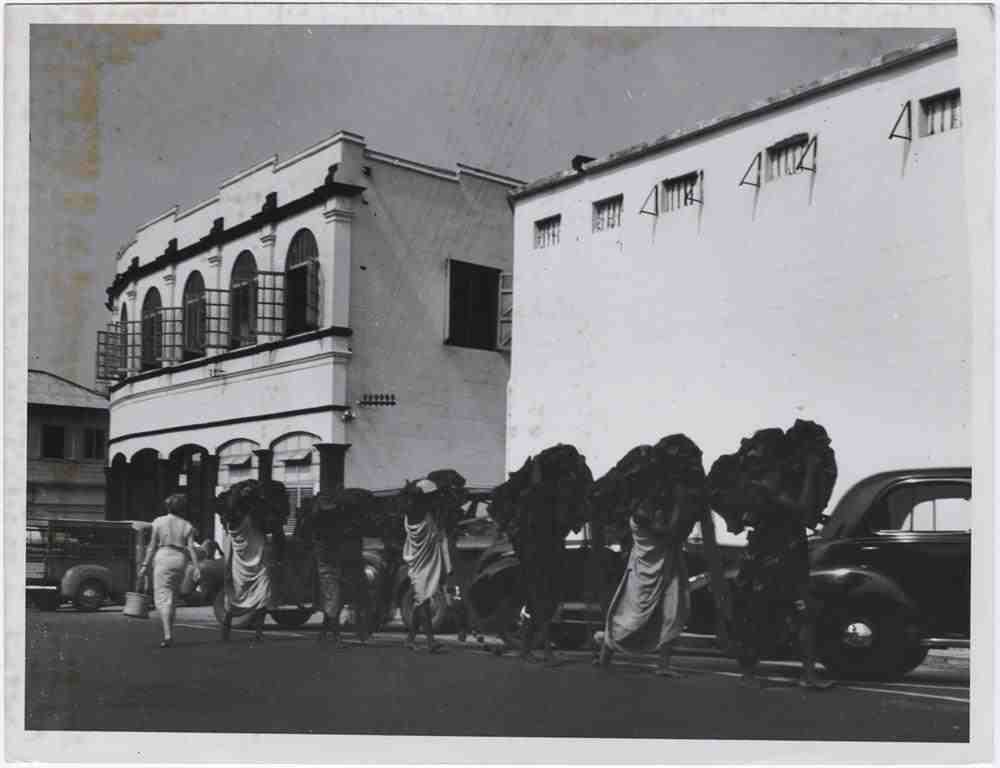
History: Richard Wright’s Photographs of Ghana -1953 Part Two


Paulina Opoku-Gyimah says: Wow Ghana like Malaysia in 1953 -a few years before its Independence in 1957 must have been electric..

With numerous mass rallies, political awareness and the spirit of hope in the air -Gold Coast must have felt like it was entering some sort of utopia…

Village or City, at a political rally, or festival; at the market, or at a funeral -or on the streets, -50’s Gold Coast [Ghana] was full of hope…I wonder if expectations were -met???

There are many more photographs in this collection -and they are well worth checkng out at:
http://digitalcollections.library.yale.edu/RelatedInterest.aspx?qid=1917628
http://digitalcollections.library.yale.edu/RelatedInterest.aspx?qid=1917628&qs=73


Credit: All photos taken by Richard Wright on a trip to Ghana in 1953...

Source: http://digitalcollections.library.yale.edu/1918159.jpo
http://digitalcollections.library.yale.edu/RelatedInterest.aspx?qid=1917628

P.s I’m thinking that’s Ghana first president, Kwame Nkrumah is in the last photograph, -standing in the centre… What do you think???
 

Breaking News: City trader Kweku Adoboli, who lost £1.4bn of Swiss bank UBS's money, has been found guilty of one count of fraud…..


A City trader who lost £1.4bn ($2.2bn) of Swiss bank UBS's money has been found guilty of one count of fraud.

Kweku Adoboli, 32, of Whitechapel, east London, denied four charges of false accounting and two of fraud between October 2008 and September 2011.

The prosecution told Southwark Crown Court he was "a gamble or two away from destroying Switzerland's largest bank".

Mr Adoboli said he was encouraged to take risks by his bosses. The jury is deliberating on the other charges.

Mr Adoboli, who was arrested on 15 September 2011, worked in UBS's global synthetic equities division, buying and selling exchange traded funds (ETFs), which track stocks, bonds and commodities.

He had joined the bank as a junior trader in 2006.

The court was told Mr Adoboli lost £1.4bn of the bank's money in "unprotected, unhedged, incautious and reckless" trades.

But Mr Adoboli, the Ghana-born son of a diplomat, told the jury his senior managers were aware of his actions and encouraged him to take risks.

He claimed he lost control over his trades during a period of market turbulence last year.

The court heard that at one point he stood to lose the bank £7.5bn.


Credit: BBC / Source: http://www.bbc.co.uk/news/uk-20338042

Monday, 19 November 2012

Ghana’s Political Poop…


Film Clip Credit:ttp://www.youtube.com/watch?v=bowGBmlckDc&feature=player_embedded

Paulina Opoku-Gyimah says: Happy World Toilet Day folks (http://www.worldtoiletday.org/).. I thought I’d share the following by Afua Hirsch concerning the on going sanitation issues in the motherland… Do follow the link at the end and read the comment with regards to this piece -they are heartfelt. I really feel that the world at large likes/loves Ghana -and are rooting for us -and we [Ghana] need to get our act together -and start tackling real issues. As DavidWTN commented after Afua Hirsch’s piece, “If we [Ghana is serious about getting out of poverty then we have to start with Sanitation -first” and I soooo agree.

There’s no point in complaining about people urinating and defecating in gutters, on the streets or on the beach -when there are very few public toilets.. Ghana’s Sanitation issues are real -and must be the number priority for the government -right now!!!

Ghana Rising would like to take this opportunity to thank “Sherri Thompson, popularly known as Mama Loo for her work building sustainable toilets for schoolchildren in Accra” -God Bless you.

“If you are serious about helping people out of poverty then you have to start with Sanitation First. This explains why: http://www.wherevertheneed.org.uk/our-work/sanitation “ DavidWTN

“interestingly, a lot of this plastic waste apparently comes from a solution to a previous sanitary issue. Everywhere you go people drink water from the small plastic sachets sold on the streets, then chuck them - one of the biggest culprits in blocking drains. But these were introduced because the old method - people sharing cups of water sold by vendors - was thought to spread disease. It shows how hard these problems are to unravel.” Hannover Tim (http://twoyearsinaccra.blogspot.com/)


Ghana's Mama Loo wants sanitation push in country where poo is political

People are taking Accra's sanitation into their own hands as, despite showy clean-up campaigns, the authorities cannot cope


By Afua Hirsch / Date: 13/11/12 Credit: guardian.co.uk


A water course choked by rubbish in downtown Accra. Photograph: Pat Bennett/Alamy
 
Ghana's capital city, Accra, is in the midst of a major sanitation overhaul. High-profile "clean-up days", involving loud music, trucks plastered with slogans, sanitation workers, volunteers, journalists, police and ministers posing for the cameras as they shovel sludge from the streets, have been lauded as a way to engage the public with the need to clean up the city.

The need to clean up Accra is beyond question. The city has suffered major flooding in recent years due to large quantities of rubbish choking waterways. Outbreaks of cholera are frequent, and potential earnings from tourism are hampered by the use of the city's main beaches as a public toilet.

Accra residents say one of the major problems is the lack of private toilets, with 86% of the population estimated to be living without access to a toilet in their home.
"You cannot say the sanitation situation in Accra is good. The major issue is that many people here are coming from poor backgrounds and homes where there are no toilets," says Kingsley Obinkyeri, who runs a weekly radio show in the capital called Curious Minds, in which young people talk on air about their experiences of sanitation and other issues affecting their wellbeing.

"Sanitation issues are very, very important for young people," he said. "It is much harder for them to have to go out at night, for example, to heed the call of nature. And when girls are menstruating and there are no toilets in their school, they stay at home. So it begins to affect their education, too. If waste was handled properly, there would be opportunities for wealth creation – through organic fertiliser, biogas and recycling."

The problem of how to increase access to toilets has become a significant issue in Ghana's upcoming elections.

"[The lack of toilets in people's homes is] one of the main contributors to the bad sanitary conditions, especially in the cities … because people are going to the beaches and defecating and messing up the atmosphere," said the Ghanaian vice-president, Paa Kwesi Amissah-Arthur, during an election debate last week. "The first thing we have done is to reorient people away from this by creating a housing code that imposes a responsibility on landlords to have toilets in their houses."

But critics say the role of politicians in sanitation has only made Accra's problems worse. "The problem is that poop is politicised," said Sherri Thompson, popularly known as Mama Loo for her work building sustainable toilets for schoolchildren in Accra. "Public toilets are revenue-generating – hundreds, in some cases thousands, of people might visit a public toilet in any one day, and each pays a fee, so there is money to be made."

"Every time a different government wins, they get rid of whoever was previously operating public toilets, and give them to their 'veranda boys' [who control access] to operate instead," she said. "In some cases these groups take care of the facilities. But others are appalling. It's disgusting."

Thomas is one of many people taking Accra's sanitation into her own hands. Despite the clean-up campaigns, the authorities admit they are not equipped to cope. The Accra metropolitan assembly public health director, Dr Simpson Anim Boateng, recently told journalists that the whole of Accra is served by about 130 environmental health officers, some of whom deal with more than 100,000 residents.

In the Ledzokuku Krowor area of Accra, the local authority is open about the challenges it faces. "Waste management remains a challenge confronting the municipality, despite efforts so far made, and certain areas are characterised by choked drains, indiscriminate waste disposal and uncollected refuse in central waste containers," says the local government website. "[Waste can be found in] bodies of water, drainage systems and other open spaces."

"Notable factors include poor conceptualisation of sanitation; lack of adequate sanitary facilities; ignorance and irresponsibility; lack of community action; springing up of unauthorised temporary structures; a continuously increasing number of squatters; the lack of regular budgetary allocation for sanitation; and a virtual absence of fee-based service provision in low-income areas."

The government says it is tackling some of these problems with its public hygiene overhaul, including a national sanitation taskforce under the ministry of local government and rural development, and the creation of Zoom Alliance – a private waste-collection entity that is conducting an anti-littering ad campaign, and distributing bins and rubbish bags.

But critics insist that these measures do not address the critical lack of resources for municipal authorities whose job it is to deal with waste, and the need for wide-ranging re-education. "I personally doubt that these activities will have the desired long-term effect," said Adam Reese, a local journalist who follows sanitation in Accra. "I believe that sanitation habits are cultivated and reinforced over the course of a lifetime, and I doubt a single government-funded event can fundamentally transform long-held attitudes."

• This article was amended on 15 November 2012 to correct the name of Sherri Thompson


Source:http://www.guardian.co.uk/global-development/2012/nov/13/ghana-loo-sanitation-poo-political?INTCMP=ILCNETTXT3487